NOW Play Australia
A series of three videos showcasing our action research in a regional area of Victoria, in partnership with Early Childhood Educator, Jessica Pollard, and Koorie Engagement Support Officer, Tim Clark, were published on the VicTESOL Early Childhood Education Series webpage. These short teacher resource videos demonstrate how the NOW Play project supported young children’s language development and Indigenous cultural awareness through Indigenous book reading and play-based learning.
An additional two videos showcasing the action research project in the same regional area of Victoria, undertaken in collaboration with Educational Leader and Kindergarten Teacher, Megan Hancock, and Koorie Education Support Officer, Tim Clark, have also been published on the VicTESOL Early Childhood Education Series website. Video 1 shows how researchers and educators collaborated to support children’s knowledge of Indigenous languages and cultural practices as they planned, created, and cared for a bush tucker garden.The video highlights how the project encouraged curiosity, discovery, and connections with the natural world through hands-on learning experiences. Video 2 explores the collaborative processes through which Aboriginal culture was embedded in children’s play. This involved engaging with the community and fostering dialogue among early childhood educators about culturally safe practices and culturally responsive pedagogies.
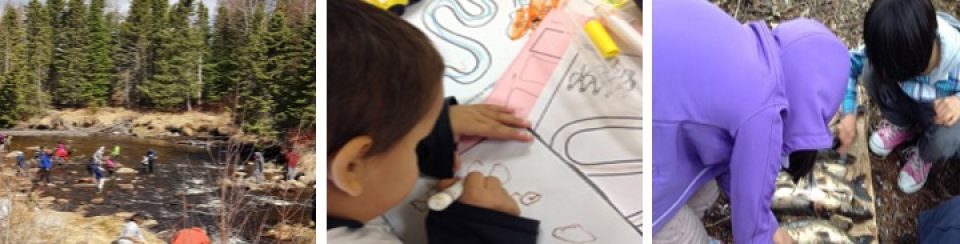
Our action research project on Palm Island, undertaken with educators from the Palm Island Community Company (PICC) Child and Family Centre, involved the planning, implementation, and review of two on-Country play events designed to explore how young First Nations children’s cultural knowledge and language learning can be enhanced through play-based experiences. Central to the study was the intersection of place, culture, language, and educator expertise, and the ways these elements can foster playful, relational, and culturally grounded pedagogies.
Professional videography of this work has been completed, including interviews with educators, and two videos have been produced. One video focuses on children’s play and learning during the on-Country experiences, while the second explores educators’ beliefs and practices.
The link to the VicTESOL webpage is HERE.

Shaping a common pedagogical and didactic understanding through play and language meetings
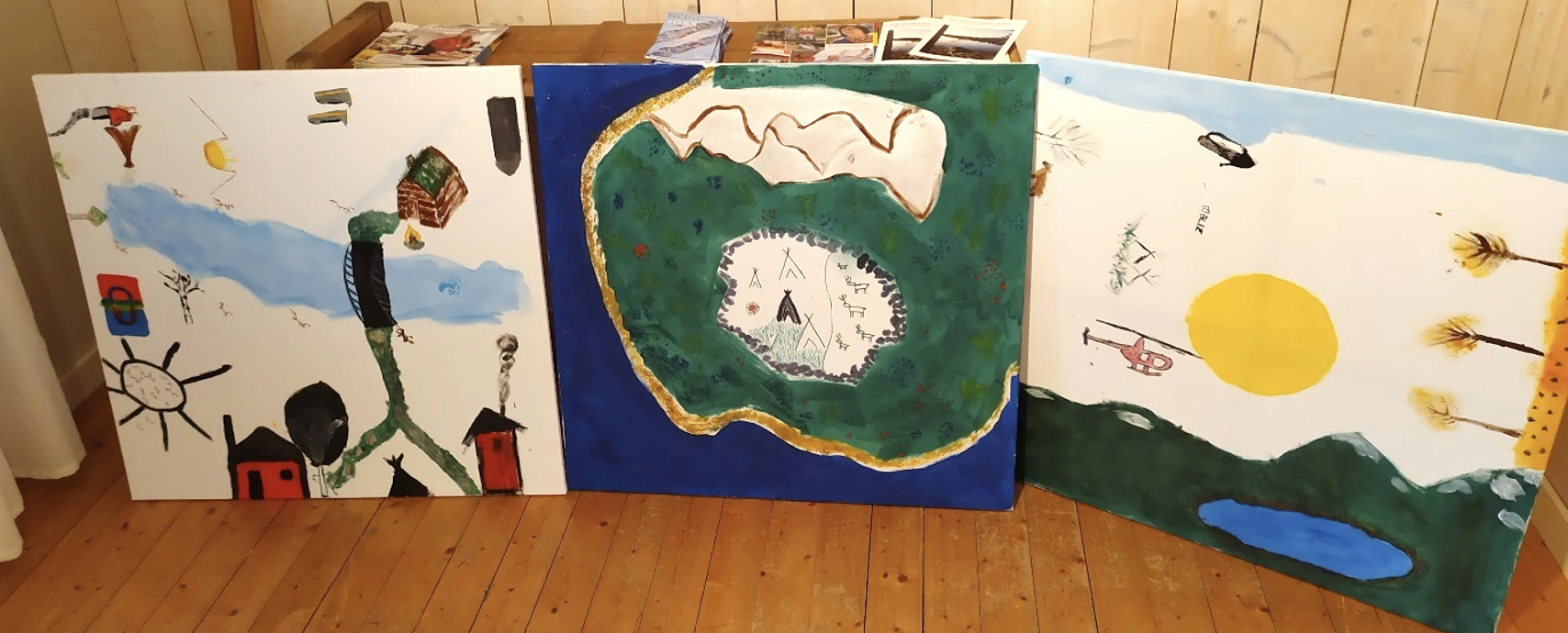
After the Toronto meeting in May 2023, the Sámi teachers in the Swedish sister project, Play and language in Sápmi, started to talk about common pedagogical and didactic principles that can strengthen the language situation in our local Indigenous context. The principles that have emerged during the project are as follows:
- The feeling of unity and belonging (social cohesion) is a central goal of the meetings
- Living language is reachable – we aim at always using Sámi language
- In Sápmi on Sámi land – Always On-Land, never Off-land in our context
- Sámi spirit – we visit places that strengthen us
- Vuöllie/vuolie/vuolle/luohti – Sámi yoik and singing is our shared knowledge and tradition
- Locally adjusted prerequisites and goals
- We focus on the potential (Ávnnastit attáldagaid = collect and cherish talent and knowledge)
These principles have been the starting point in designing action research activities together with the academic research partners. During the Fall 2023, the teachers and resource staff decided to arrange three whole-day Play and Language Meetings where learners and speakers of three different Sámi languages were invited. The meetings were arranged as part of the mother tongue tuition activities and could thus be arranged during a regular school day. Pupils who usually tend to the lessons online and are geographically isolated from their peers, were also invited to the physical play meetings.
One of the goals of the meetings is to produce content that can be shared with the pupils who participate in the NOWPLAY2 project. We also wish to strengthen the feeling of belonging together in a context where the pressures from outside as well as from within the community are tangible and affect relationships in a negative way. Our play meetings have also offered an additional linguistic and social arena for Indigenous pupils who belong to the minority in their own schools. We speak about shared values and we also talk critically about the situations in which Sámi people find themselves when in conflict with extracting forces. Our pupils have expressed that, for them, it is very important to be able to openly be “themselves”, and that has been possible through our meetings.
Our inclusive and collaborative meetings mediate traditional knowledge as well as modern knowledge of the Sámi society. In the Fall 2023 we have done this by exploring the themes of socialization, connections/relations, and collaboration, exemplified by the following descriptions of the meetings:
- Socialization and Language Use

September 2023: Young learners of three different Sámi languages were brought together. The participants worked in language groups and gathered into one big group to socialize and share playful traditions. A lot of effort was put on creating a translanguaging space (Wei, 2011) where the pupils could openly show their Sámi identities and train their language skills, and to be creative and critical. A yoik guessing competition was arranged.
2. Connections/Relations in Sápmi, Me and Others
October 2023: The Sámi young were invited to collaborate and share their thoughts and experiences about being Sámi in the modern world. Collective and individual voices got blended during the meeting. Differences and similarities were displayed and honored in the activities. We arranged a yoik action to support our sisters and brothers in Norway as they demonstrate against windmill parks.
3. Collaboration (Co-work), Language, and Play

December 2023, planned: During this last planned whole-day meeting the children and the young will explore life in Sápmi and produce their own films. A shared yoik/dance session will be recorded. During this meeting, the pupils will also play games and computer games with Sámi themes. The theme of the last meeting is co-work and collaboration as the Sámi young from different language groups need to work together to solve problems.
Our project was presented as the key note talk at Sámi Education Conference in Kautokeino on the 8th November 2023, link to the conference home page is HERE.
References:
Wei, L. (2011). Moment Analysis and translanguaging space: Discursive construction of identities by multilingual Chinese youth in Britain. Journal of Pragmatics, 43(5), 1222–1235. https://doi.org/10.1016/j.pragma.2010.07.035

Wenesh Niin (Who am I)
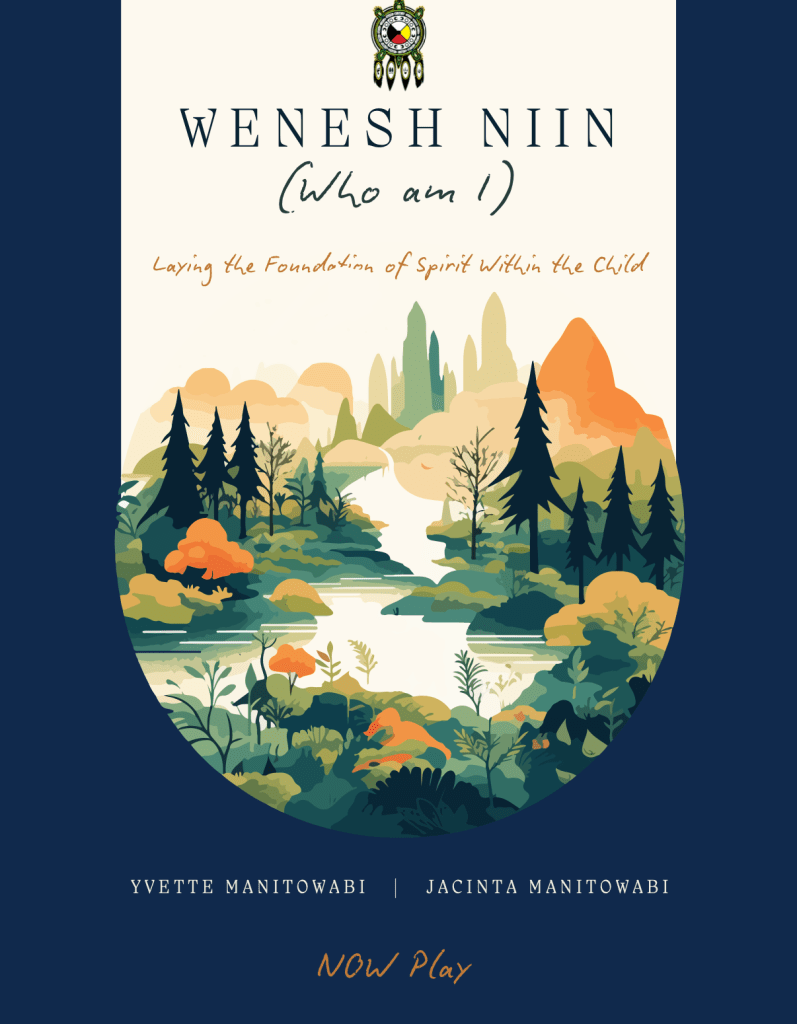
NOWPlay is proud to present “Wenish Niin: Who Am I?”, a comprehensive teacher’s resource designed to assist educators in understanding and supporting a child’s learning journey. Created by educators Yvette and Jacinta Manitowabi, this resource blends Anishinaabe teachings with the Ontario curriculum to revitalize Anishinaabemowin and nurture students’ gifts and cultural identities. Through a holistic, land-based learning approach, it encourages educators to create meaningful environments that connect language, writing, and community.
Click on the image below to access the resource!